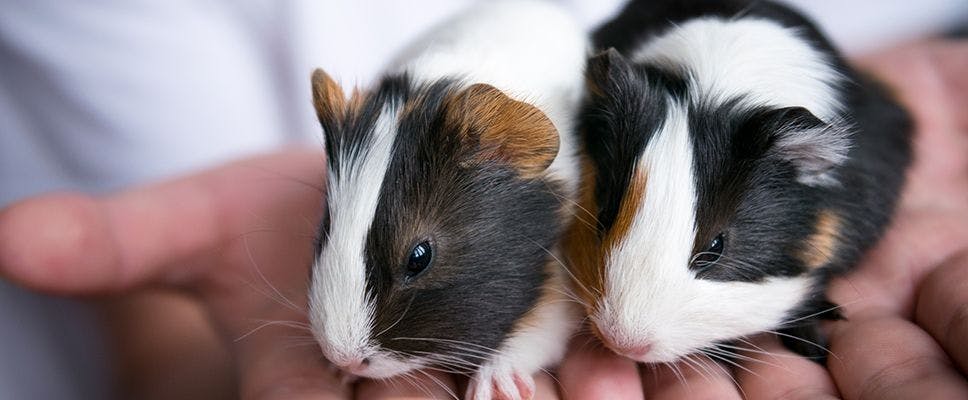
Guinea pigs may be small, but they can come with big personalities, and a few important care needs to match. From feeding them the right food to setting up bedding and ensuring their health needs are met, here's what you need to know before bringing your first guinea pig home.
Setting up your guinea pig's shelter or housing
Guinea pigs generally need a very hardy structure called a hutch (sometimes called a cage), with two sections:
- A fully enclosed area for protection from the elements and for sleeping.
- An activities section.
Ensure your guinea pig's cage or hutch has good ventilation and allows them to avoid direct sunlight, as they are much more sensitive to heat than cold and are susceptible to heat stroke. It is best to position the hutch off the ground, with adequate shelter.
The guinea pig’s hutch should be a minimum of 70sq cm per guinea pig. If your hutch has a wire floor, ensure it is well covered with hay, so as not to risk your guinea pig catching and breaking its leg.
Bedding material should be soft straw or hay, also provide material for your guinea pig to burrow under in the activities section.
Care must be taken if mixing rabbits and guinea pigs together. Bullying can occur and each species has different dietary requirements.
Guinea pig chewing
Guinea pigs will chew anything including carpet, furniture, shoes and more. Serious hazards include electrical wires and poisonous plants. Their teeth grow continuously and they need to chew to wear them down so the mouth closes properly.
Always provide guinea pig toys, such as gnawing toys or chew toys so they can keep busy and wear-down their teeth.
How to handle your guinea pig
Let guinea pigs get used to your hands without picking them up for a few days.
Approach your guinea pig calmly talking to and petting them. Carefully place your hand under your guinea pig’s mid-section, just behind the front feet, and use your other hand to support their hindquarters. It may help to restrain the front legs between your fingers.
Bring your pet close to your chest, supporting their entire body with two hands. Always keep a firm yet gentle hold.
If your pet begins to struggle, lower yourself to the floor to reduce the chance of fall injuries. When placing your pet back in its cage, release at ground level.
Feeding a guinea pig
Your guinea pig must have a constant supply of fresh water, good quality hay, and a daily supply of high quality guinea pig food, such as pellets. Fresh vegetables should also be fed daily. You should offer your guinea pig three types of veggies from the following list: broccoli, carrots, cucumber, brussel sprouts, capsicum, dandelion greens and parsley.
Guinea pigs should not be fed celery, spinach, raw beans, rhubarb and beetroot. Do not feed them lettuce either. It is non-toxic but often causes diarrhoea.
Fruit such as bananas, apples, oranges, strawberries and raspberries make good treats.
Vitamin C is very important for guinea pigs, as they cannot produce their own (like us, they are susceptible to scurvy). It is vital they get daily fruit and vegetables, as we mentioned earlier. Vitamin drops for small animals should also be administered in their water on a daily basis.
Ensure fresh water is available in special, non-drip bottles with stainless steel nozzles, as wet bedding may cause moist dermatitis and coccidiosis.
Guinea pig bedding
The flooring should consist of hay or soft straw (please be mindful that hay guinea pig bedding may be eaten away and will need replenishing). Sawdust should be avoided as it is too fine and can irritate the eyes, nose and ears. Create a sleeping area with something like a bird nesting box, filled with hay or soft straw.
Ensure you keep your guinea pig under constant supervision if bringing them inside to run around.
What treatments do guinea pigs need?
Worming
Guinea pigs should be wormed every three months with a small animal wormer.
Mites
Regular examination for fur and ear mites is required. Lice and mites are quite common in guinea pigs, which can be easily picked up from new bedding (e.g. hay and straw). Mite and lice sprays can be used in minor outbreaks; however veterinary treatment must be sought if the condition worsens.
Nail trimming
Guinea pigs nails can grow very long and sharp, they need to be checked on a regular basis and trimmed as necessary.
Heat stroke
Guinea pigs do not tolerate heat well and can die from overheating. On very hot days provide relief through frozen plastic bottles of water, a fan and frozen fruit and vegetables.
Guinea pig checklist
✓ Hutch
✓ Hay (bedding and food)
✓ Shredded newspaper
✓ Treats
✓ Food pellets or mixes
✓ Mineral stones
✓ Water bottle
✓ Food bowl
✓ Vitamin Supplement
Ready to stock up on supplies for your new tiny companion? Explore our full range of guinea pig products today.