
Ticks can pose a serious threat to your dog’s health and should always be taken seriously, even if your dog has never had one before.
To help keep your dog tick-free, it’s important to understand what ticks are, where they’re found, how to check for them and what to do if you find one. We spoke to Dr Alison Kemp from our VET team to answer some of the most common questions about ticks on dogs.
What types of ticks can affect dogs?
When we talk about ticks, we’re not referring to just one type. Australia is home to many different tick species, several of which can affect dogs.
Unlike fleas, which are insects, ticks are arachnids, making them more closely related to spiders.
Common tick species found on dogs
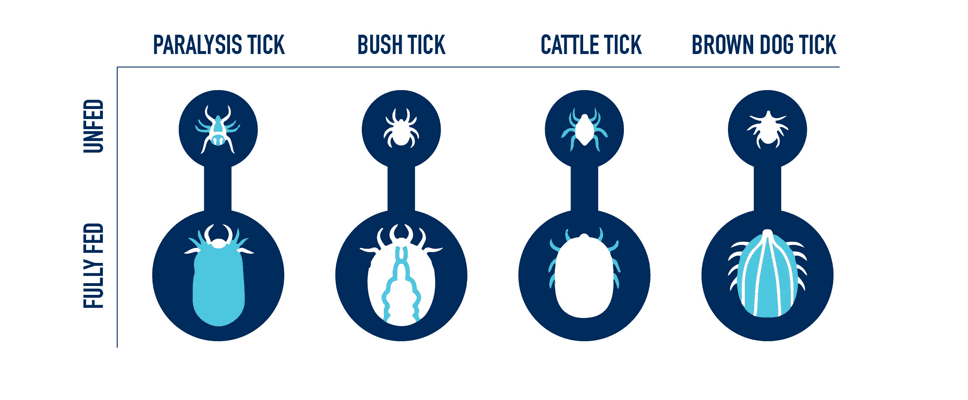
Paralysis Tick: Ixodes holocyclus
The paralysis tick is one of the most important ticks for dog parents to be aware of because it can cause serious illness. Found predominantly along the east coast of Australia, this tick is often present in grassy areas and vegetation.
It can range from around the size of a pinhead to the size of a fingernail, depending on how much blood it has consumed.
“The paralysis tick is the one we worry about most since, when it bites, it injects a powerful neurotoxin into the body, which can be fatal to dogs and cats,” says Dr Alison.
Signs of tick paralysis in dogs
It’s important to recognise the possible signs of paralysis tick toxicity before your dog becomes critically unwell. Early symptoms can sometimes resemble other illnesses, so contact your vet as soon as possible if you’re concerned.
Signs may include:
- Coughing
- Vomiting
- Wobbliness
- Sitting down more often than usual
- Panting that may progress to collapse
- Weakness or paralysis, often beginning in the hind legs
You can also check your dog’s coat by running your fingers through it carefully or using a fine-tooth comb. Pay close attention to hidden areas such as inside and around the ears, between the toes and around the face and rear.
If you suspect your dog may have a paralysis tick, contact your vet promptly.
Brown Dog Tick: Rhipicephalus sanguineus
The brown dog tick is reddish-brown and is commonly found in kennels and other areas where dogs live. Dogs are its most common host, and this species generally prefers warmer climates.
Brown dog ticks can complete their entire life cycle indoors, making it important to keep your dog’s bedding and living areas clean.
Although they do not cause paralysis, brown dog ticks can irritate the skin and transmit diseases including canine ehrlichiosis and babesiosis, which can cause symptoms such as fever, bleeding disorders and serious systemic illness.
Bush Tick: Haemaphysalis longicornis
Bush ticks can attach to dogs and cause skin irritation or a localised reaction around the bite site.
They can appear reddish when unfed and become greyer as they feed and become engorged.
Cattle Tick: Rhipicephalus (Boophilus) microplus
As the name suggests, cattle ticks primarily affect cattle, although they can also attach to dogs and other animals.
Cattle ticks can carry blood-borne organisms responsible for diseases such as babesiosis and anaplasmosis. These illnesses can be serious, making early veterinary assessment important if your dog becomes unwell.
Did you know? Ticks start small but become larger as they feed. Once fully engorged, they eventually drop off their host.
How do ticks affect dogs?
The signs associated with ticks vary depending on the species involved.
Less dangerous ticks may cause irritation around the attachment site. However, if a tick transmits disease, your dog may develop other signs, including:
- Lethargy
- Fever
- Pale gums
- Yellowing of the skin
- Red or discoloured urine
Paralysis ticks can cause much more serious neurological symptoms, including weakness, difficulty breathing, collapse and paralysis.
If your dog appears unwell and you suspect a tick may be responsible, contact your vet.
How to check your dog for ticks
Regular tick checks are particularly important if your dog spends time outdoors, especially in areas with long grass, bushland or dense vegetation.
Run your fingers slowly over your dog’s entire body, feeling for small bumps or unusual areas.
Pay particular attention to:
- Around and inside the ears
- Around the eyes and face
- Under the collar
- Under the front legs
- Between the toes
- Around the groin and rear
- Along the tail
During periods of higher tick activity, consider checking your dog at least once daily and after walks through bushland or long grass.
How to remove a tick from a dog
If you find a tick on your dog, it should be removed promptly. If you are unsure how to remove it or your dog is showing any signs of illness, contact your vet for assistance.
What you need for tick removal
Before removing the tick, have the following ready:
- Gloves
- A tick-removal tool or appropriate tweezers
- A jar or container for the removed tick
Keeping the tick may allow your vet to help identify it if your dog becomes unwell.
Removing the tick
If possible, have another person gently hold your dog still while you remove the tick.
Using an appropriate tick-removal tool or tweezers, grasp the tick as close to your dog’s skin as possible and remove it carefully according to the directions of the tick-removal tool being used.
Avoid squeezing the tick’s body
If you are unable to remove the tick completely, your dog becomes distressed or you have any concerns, contact your vet.
After tick removal
Place the tick in a sealed jar or container, then clean the area and wash your hands thoroughly with soap and water.
Continue monitoring your dog closely after removing the tick. Removing a tick does not necessarily mean your dog is out of danger, particularly if it was a paralysis tick or your dog is already showing symptoms.
If you notice weakness, vomiting, breathing changes, wobbliness, lethargy or any other concerning symptoms, seek veterinary advice promptly.
Do you know about Petstock Vet?
Find your local Petstock VET clinic for personalised support.
Learn MoreWhen is tick season for dogs?
Ticks can be active throughout the year, although their prevalence can increase during warmer and more humid conditions.
Rather than relying on a particular season, it’s best to remain aware of ticks year-round and maintain your dog’s recommended parasite prevention routine.
If you live in or travel through a tick-prone area, regularly check your dog after spending time outdoors.
How to prevent ticks on dogs
Regular preventative treatment and physical tick checks are two of the most important ways to reduce your dog’s risk.
Here are a few things you can do.
1. Be aware of your environment
Keep grass short and reduce leaf litter, plant debris and dense vegetation around your yard where possible.
When walking your dog, be particularly vigilant in bushland, long grass and other areas where ticks may be present.
2. Groom your dog regularly
Regular grooming can make it easier to spot ticks and other changes to your dog’s skin or coat.
Dogs with thick or long coats may require particularly thorough checks after spending time outdoors.
3. Conduct routine tick checks
Check your dog after walks and outdoor adventures, especially if you live in or have visited a tick-prone area.
During periods of higher tick activity, daily checks can provide an additional layer of protection alongside preventative treatment.
4. Keep tick prevention up to date
Prevention is better than cure. One of the most effective ways to protect your dog is to maintain an appropriate parasite prevention routine that includes tick protection.
Regular tick prevention treatments for dogs
Tick prevention for dogs comes in several forms, including chews, spot-on treatments, collars and tablets. Some products also provide protection against fleas and worms.
The right option will depend on factors such as your dog’s age, weight, lifestyle and individual needs.
Speak to your vet or visit your local Petstock to chat with our team about which option may be suitable for your dog, and always follow the product label and dosing instructions.
Ticks can pose a serious health risk, but regular preventative treatment, routine checks and knowing the warning signs can help you act quickly and keep your dog protected.
Ready to help protect your dog? Explore Petstock’s range of tick prevention treatments for dogs and find an option that suits their needs.