
Suppose you've noticed your cat partaking in some less than desirable toileting behaviour - marking walls, objects and anything in the environment with urine. Don't fret; this is not uncommon and usually has nothing to do with needing to go to the toilet.
This behaviour could be cat spraying, otherwise known as cat urine marking, which you will need to address to avoid it becoming a potential habit around the home. Keep reading to find out what cat spraying is, why it happens and how to stop it from happening.
What is cat spraying and what does it look like?
Cat spraying (or cat urine marking) is a common behaviour in cats where they deposit small amounts of urine on surfaces like walls, furniture or doors.
“In my experience, cat spraying is one of the most common presentations at behavioural consults/referrals in cats. It’s a urine-marking behaviour where the cat backs itself up against a vertical background and ejects a stream of urine towards that background or an object,” says Petstock vet Dr Natalia Li.
As mentioned by Dr Li, cat spraying looks like your cat is going to the toilet but with a very particular action sequence. You may notice your cat intensely sniffing a specific area or object before backing up with a stiff tail and quivering before releasing urine. In some cases, your cat may also conduct a similar action, but without the direct vertical back-up.
What causes cat spraying?
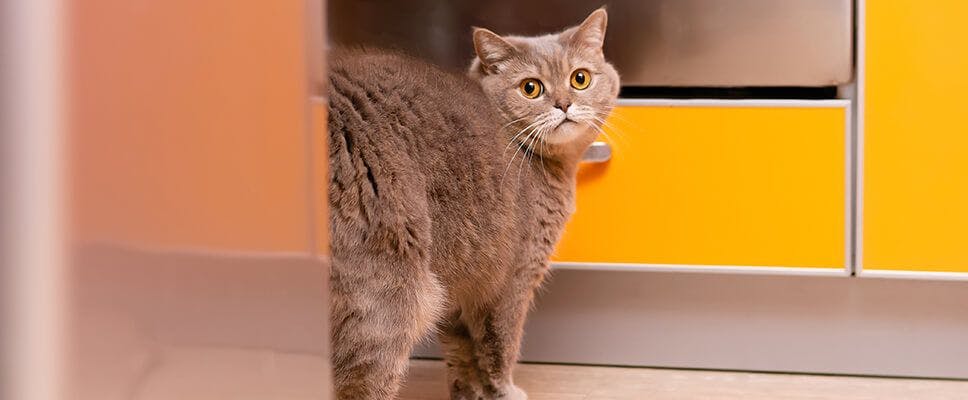
Changes to your pet’s environment, such as bringing home a new pet or baby, can lead to cat spraying. There may also be new cats in the area or outside that your cat can sense, even when indoors.
For some cats, stress can be caused by even the smallest changes, like moving a chair into a different place of the living room. Simply put, cat spraying is a cat’s way of communicating their unease or stress through a physical response, natural to their instincts.
What if I don't know if the behaviour is cat spraying?
In some cases, if you can’t identify an apparent reason why your cat is spraying, it may be a symptom of some diseases such as bacterial bladder infections, urinary tract diseases or incontinence. More severe conditions that cause increased urination include kidney failure, liver disease, increased thyroid hormone production and diabetes. All these illnesses should only be diagnosed and treated by your veterinarian.
“It’s important to get a spraying/stressed cat checked out as soon as possible as they’re also very prone to a condition called Feline Lower Urinary Tract Disease. Basically, their brain sending stress signals that would directly affect their urinary tract by causing benign inflammation. Left untreated, it can progress to more serious problems such as urinary tract infection, kidney problems and associated conditions,” says Dr Li.
How to stop cats From spraying
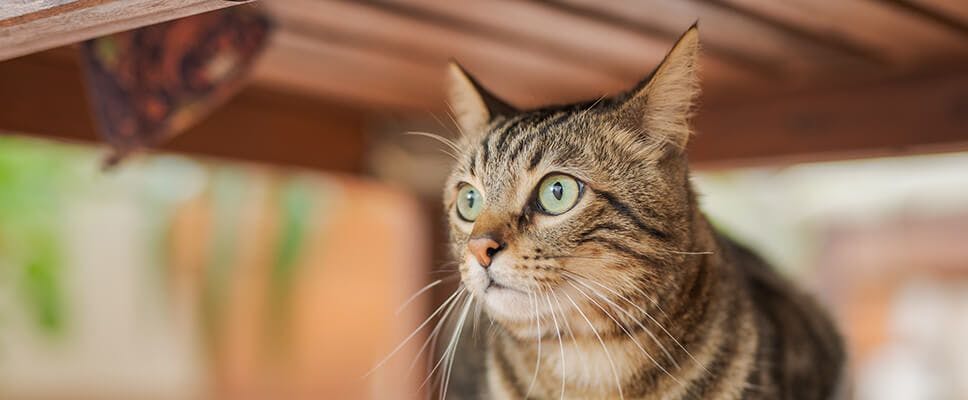
Unfortunately, there is no fool proof way of eliminating your cat’s spraying behaviour even if you try some of the most common methods; it’s also natural and shouldn’t be punished. It’s all about ensuring you make your cat feel as comfortable as possible in their environment and supporting anxiety.
“A vet visit is usually warranted for this issue as we need to rule out other pathological reasons why a cat is urinating inappropriately before treating it as a behavioural case instead of a renal case. Additionally, constant undesirable emotion can be an animal welfare issue, which may or may not lead to further pathological health problems,” advises Dr Li.
-
Firstly, it’s important to try and identify (if you can) the reason behind the spraying. If you can address the anxiety or stress with some small environmental adjustments, this should always be the first step, in conjunction with speaking to your vet.
-
If you have a multi-cat household, ensure you have at least 1-2 cat litter trays per cat. Make sure the litter trays are at least 1.5 times the length of the cat (from nose to tail base) both in width and depth.
-
Once your cat has marked their territory through spraying, make sure you eliminate the odour as soon as possible to deter your cat from spraying the same area.
-
Pheromones/pheromone therapy is a great way to address anxiety and stress for cats. Synthetic pheromones are in many products on the market, including the very popular Feliway, which replicates these pheromone signals. Feliway is often used to ease stress, reduce aggression, and ease your cat into a new home.
-
Depending on the severity of the spraying, your cat may require medication and pheromone therapy for the rest of their life. This decision should be guided by your vet only.
What Should You Do to Clean Up After Cat Spraying?
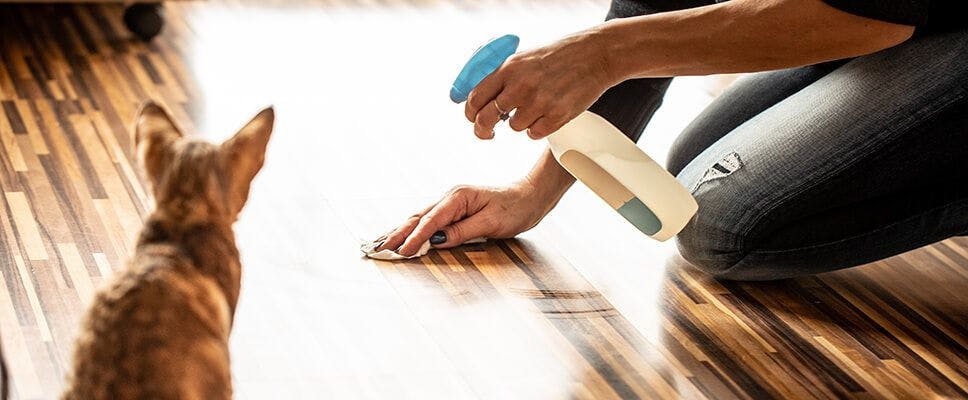
Apart from wanting to keep your house smelling and feeling fresh without any hints of cat urine in the air, thoroughly cleaning after cat spraying will help deter and reduce the likelihood of your cat returning to the same spots. Making sure you clean up sufficiently will help your cat and the condition of your house in the long run.
As you can imagine, just like human cleaning products, there are quite a few options out there when it comes to removing urine stains and eliminating pet odours using sprays, solutions and powders.
Make sure you read the product descriptions carefully to ensure you are combating the urine with these elements. And to deter further, you can purchase repellent sprays to apply after the cleaning process.