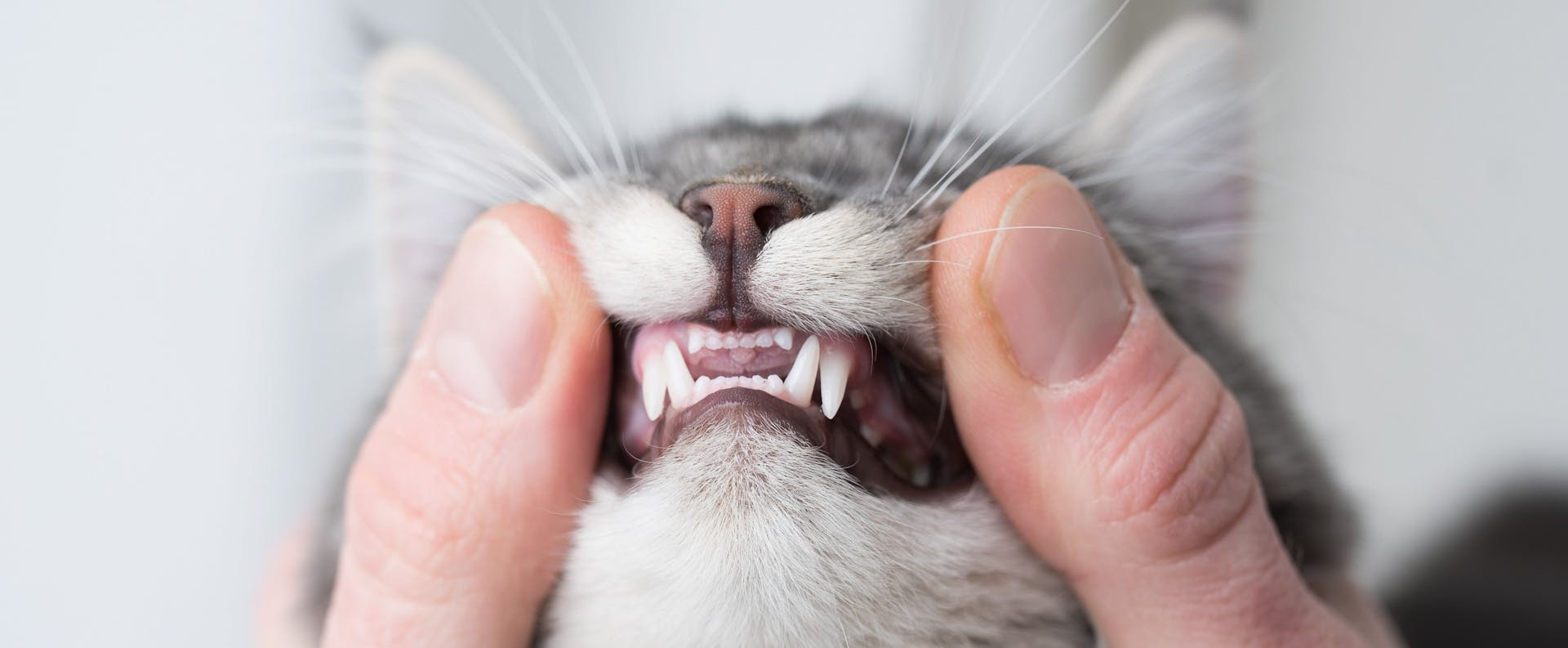
Tooth and gum disease is common in cats – so common, in fact, that over half of all cats have some form of dental disease by the time they’re just three years old. Dental disease can be incredibly painful for your cat – and it can lead to larger problems like your cat refusing food and severe weight loss – so it’s best avoided. Here’s a breakdown of common dental ailments for cats, and how to prevent and treat them.
What is dental disease in cats?
‘Dental disease’ is an umbrella term which covers a series of dental-related medical issues – the most common being gingivitis, periodontitis, and tooth resorption.
Gingivitis in cats
Gingivitis is a condition wherein the gums become red, inflamed, and swollen. It’s caused by a build-up of plaque, which gradually hardens and travels beneath the gumline – further wearing down the gums.
Preventing gingivitis in cats
Preventing gingivitis involves regularly removing plaque by brushing your cat’s teeth with cat-friendly products, as human brushes are too harsh, and toothpaste designed for people can contain ingredients which are toxic to cats.
If a case of gingivitis is left untreated, it can develop into periodontal disease.
Periodontal disease in cats
Periodontal disease is a condition caused by an accumulation of tartar, which has travelled below the gumline and caused damage to the supportive structures around the teeth. It mainly affects the bone and gums surrounding the teeth, and can eventually lead to tooth loss.
Periodontal disease cannot be reversed, and treatment often involves removing affected teeth.
The signs of periodontal disease in cats
The signs of periodontal disease vary in severity, but can present as the following:
- Tartar on the teeth (looks like a hard, yellowy substance on the surface of the tooth)
- Red or inflamed gums – especially near the teeth
- Drooling
- Bleeding gums
- Swollen face or jaw
- An aversion to food, or a change in diet habits
Cats are experts at hiding pain, so subtle changes like pawing at their mouth, dropping food while eating, or only chewing on one side can be early clues that something isn’t right.
The four stages of periodontal disease progression in cats
In consultation with expert vet Dr Alison Kemp from Petstock Vet, these are the standard levels used to assess your cat's oral health.
- Stage one: Mild gingivitis, plaque build-up and gum inflammation. At this stage, there is no bone loss, so early treatment can help prevent further deterioration.
- Stage two: Plaque begins to harden into tartar, with mild bone loss and gum recession. Periodontal pockets may also start to form around the teeth.
- Stage three: More severe gum inflammation, tartar build-up, gum recession and bone loss. Your cat may also develop bad breath, swollen gums or bleeding around the teeth.
- Stage four: Advanced periodontal disease, with significant bone loss, deep pockets around the teeth and possible tooth mobility or tooth loss. This stage is painful and affected teeth may need to be removed.
The earlier stages can be hard to pick up with an untrained eye, which is why regular dental checks are important.
Treating periodontal disease in cats
If your cat has periodontal disease, treatment varies based on what stage they’re at. Earlier stages will most likely be treated with a vet-performed dental clean, followed by a continued cleaning program to prevent deterioration. Later stages are more likely to require teeth removal and may also need antibiotics.
Tooth resorption in cats
Tooth resorption in cats occurs when the tooth structure breaks down, beginning inside the tooth, and then if left untreated this breakdown will progress to other parts of the tooth. What causes it is unknown – though it is fairly common and is one of the major dental diseases a vet will look for in a dental check-up.
Symptoms of tooth resorption in cats
- Affected teeth will have a pinkish defect at the tooth line
- As tooth resorption progresses, the pink lesion will cover more of the affected tooth or teeth
- A reluctance to eat
- Drooling
- Irritability, particularly if you’re handling their face or touching the area near their jaw
Treatment of tooth resorption in cats
Tooth resorption must be treated by a vet – and their response will vary anywhere from monitoring the individual case to removing the tooth entirely. If you suspect your cat is suffering from tooth resorption, book in for a dental check-up with Petstock Vet.
Top tips to keep your cat’s teeth healthy
Cat parents often don’t notice a problem until their cat has bad breath or visibly rotten teeth, which means the disease has progressed. Here are some at-home ideas to keep your cat’s teeth clean.
- Give your cat daily dental treats to prevent plaque accumulation
- Add drops in their water to add an extra layer of defence against plaque
- Encourage chewing with dental toys
- Consider switching to dental kibble and avoid entirely wet-food diets, as chewing helps simulate a cleaning action
- Brush your cat's teeth regularly with pet-friendly brushes and paste
Gingivitis and early dental issues may be easier to manage when caught early. Speak to your vet for a dental plan and practice our preventative tips for day-to-day tooth maintenance.
How to clean your cat’s teeth
Cleaning your cat’s teeth is easier than you think! You can do it daily at home – just make sure you have pet-friendly brushes and paste, as dental kits designed for human use can contain ingredients that are harmful to pets. Start slowly by letting your cat sniff the toothbrush and toothpaste before gently introducing brushing in short sessions. Focus on making the experience calm and positive, and reward them afterwards so they begin to build a better association with teeth cleaning.
Want to stay on top of your cat’s dental health? Book a dental check with your local Petstock Vet, or explore Petstock’s cat dental care range for at-home support.