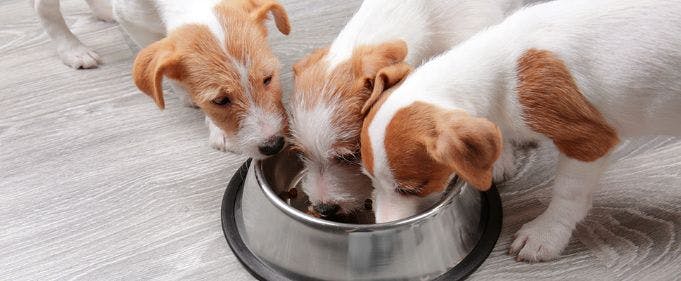
Your puppy is a little bundle of energy that is learning and growing every day. As a pet owner, you want to give your little companion the right start in life, and a healthy diet plays a big role.
A question we get asked a lot is, "What should I feed my puppy?” The main things to consider are the type of food, amount and frequency.
In this guide, we’ll walk through what to feed your puppy, how much they may need, and how their feeding routine changes across each age group.
Feeding schedule by breed size
Your puppy’s age will help determine what they eat. Until your pup is at least eight weeks old, they usually receive everything they need from their mother. After that, pet parents need the right food and feeding schedule to support their puppy’s nutrition and development.
8-12 weeks: the most critical window
Puppies need four meals a day spread out evenly. Puppy-specific food can be softened to make it easier to eat and digest. Dry kibble is okay, as long as it’s puppy-specific and softened with warm water to a gravy-like consistency. It’s important to note that small breed puppies may be prone to hypoglycaemia (low blood sugar) if they skip meals, so regular feeding is especially important.
| Small Breeds <10kg | Med Breeds 10-25kg | Large Breeds >25kg |
|---|---|---|
| 4x meals per day | 4x meals per day | 4x meals per day |
| Amount: ¼ - ⅓ cup per meal | Amount: ⅓ to ½ cup per meal | Amount: ⅓ to ½ cup per meal |
|
Food Type: Puppy kibble (small breed formula), softened OR puppy wet food |
Food Type: Puppy kibble (all breeds formula), softened OR puppy wet food |
Food Type: Puppy kibble (large breed formula), softened OR puppy wet food |
After a pup is weaned from their mother, there is no need to give them milk. Fresh water is a much better choice, as it helps keep their digestive system moving smoothly, supports nutrient absorption, and helps prevent constipation.
3-4 months old: new teeth stage
Your puppy is in a rapid growth period, with new teeth coming in. Resist the temptation to overfeed them, as this can lead to health issues later in life. At this stage, you can soften kibble less and continue offering puppy wet food sachets or packets.
| Small Breeds <10kg | Med Breeds 10-25kg | Large Breeds >25kg |
|---|---|---|
| 3-4x meals per day | 3x meals per day | 3x meals per day |
| Amount: ¼-½ cup per meal | Amount: ½ to ¾ cup per meal | Amount: ¾ to 1 cup per meal |
|
Food Type: Puppy kibble (small breed formula), OR puppy wet food. If kibble, start transitioning to dry. |
Food Type: Puppy formula kibble (all breeds formula), OR puppy wet food |
Food Type: Large breed puppy formula — keep calcium controlled OR puppy wet food |
5-9 months old: transitioning to adult food gradually
Small to medium breeds may be ready to start transitioning to adult food. Try mixing in adult food with puppy food over a 2-4 week period. Large breeds should remain on puppy formula until they reach 12-18 months old.
| Small Breeds <10kg | Med Breeds 10-25kg | Large Breeds >25kg |
|---|---|---|
| 2x meals per day | 2-3x meals per day | 2-3x meals per day |
| Amount: ¼-⅓ cup per meal | Amount: ¾ to 1 cup per meal | Amount: 1 ½ to 2 cups per meal |
|
Food Type: Adult small breed food (transition is now complete) |
Food Type: Begin transitioning from puppy formula kibble to adult kibble |
Food Type: Stay on large breed puppy formula |
10-12 months old: I’m a big dog now!
Small and medium breeds are now considered adults, but larger breeds need to continue on large breed puppy or junior food. Do not rush the transition to adult food until they’re 18-24 months old.
| Small Breeds <10kg | Med Breeds 10-25kg | Large Breeds >25kg |
|---|---|---|
| 2x meals per day | 2-3x meals per day | 2-3x meals per day |
| Amount: ¼-⅓ cup per meal | Amount: ¾ to 1 cup per meal | Amount: 1 ½ to 2 cups per meal |
|
Food Type: Adult small breed food (transition is now complete) |
Food Type: Begin transitioning from puppy formula kibble to adult kibble |
Food Type: Stay on large breed puppy formula |
Premium puppy food makes all the difference
There are many puppy foods available, but premium options are often designed to better support growth and development. Premium puppy foods benefit your pup in many ways:
Nutrition
Premium foods focus on using real, high-quality ingredients that help support your puppy’s delicate tummy. They’ll often contain prebiotics for optimal gut health and promote strong bones and a healthy coat.
A higher-protein diet can also support firmer, less frequent stools, which may make clean-up easier.
Price
When it comes to premium puppy food, ‘you get what you pay for’ often applies. The initial price may be higher than supermarket options, but the quality is far superior and better for your pup’s development. With prices starting at $2.44 for a single serve and $160 for a 15kg bag, premium food can be a worthwhile investment in your puppy’s health and wellbeing.
Brands such as Royal Canin, Hill's Science Diet and Black Hawk offer tailored blends for your puppy’s specific needs and breed.
What not to feed your puppy
So far, we’ve covered what to feed your puppy, how often and how much based on their breed, size and age. But what about foods that are difficult for young digestive systems to tolerate, or worse, dangerous to eat?
While we all know dogs love a sneaky table scrap, there are certain foods that your puppy should avoid completely. At a minimum, these foods can be dangerous to dogs. In some cases, they can be fatal:
- Cooked bones
- Onions
- Grapes
- Sultanas
- Avocado
- Lily plants
- Coffee and tea
- Alcohol
- Chocolate
- Macadamia nuts
- Artificial sweeteners (Xylitol)
- BBQ or cured meats
Feeding your puppy straight from the dining table should also be avoided, as it can lead to behavioural problems like begging and stealing! Table scraps can also be high in calories, why may contribute to unwanted weight gain and poor health. Given this, it’s best to stick to Petstock’s extensive range of high-quality, safe puppy foods, available online for delivery or in store.
Looking to give your pup the best possible start? Browse Petstock's range of premium puppy food online or in store; because a healthy pup is a happy pup!