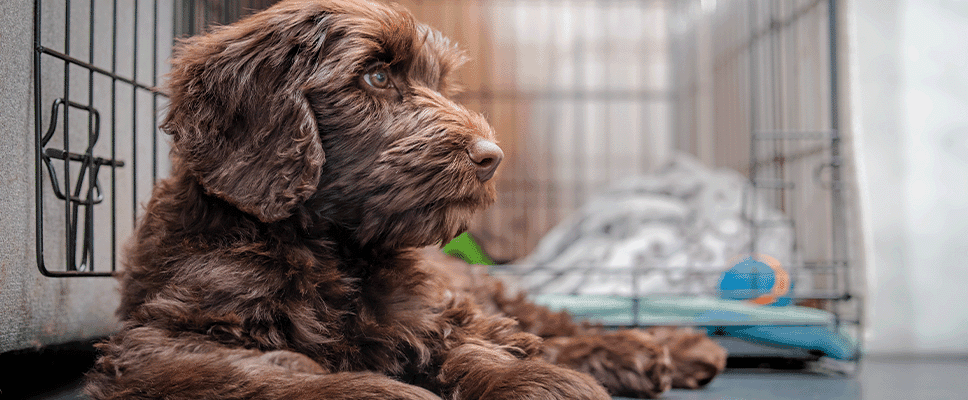
As a new puppy owner, you might find yourself overwhelmed with information – especially when it comes to crate training your new pup! Crate training can help with:
- Toilet training: Your doggo generally won't want to soil where they sleep.
- House training: Limiting your pup's access to certain areas while they learn the house rules.
- Travel: Helping your puppy adjust to travelling for vet visits or car rides.
- Comfort and security: Creating a safe place for your pup to retreat to when they feel nervous or scared.
The key is making sure your puppy sees their crate as a positive, comfortable space rather than somewhere they're forced to stay.
How to find the perfect puppy crate
When it comes to crate training your new puppy, you're going to want to make sure you have the right size for a comfortable fit!
The crate should be big enough for your dog to stand up, turn around, stretch out and lie down comfortably. Most puppy crates come with measurement guides, so make sure you know your pup's length, height, current weight and anticipated fully grown size.
Many puppy crates also come with a temporary divider. That way, you can adjust the space when they're still young and make it bigger as they grow. This can help with toilet training by discouraging your puppy from using one corner of their crate as a toilet, while still allowing plenty of room to rest comfortably.
Crates come in a range of materials, including metal, plastic and fabric, so choose a sturdy, secure option suited to your puppy's size and chewing habits.
How to crate train a puppy
Puppy crate training will take time and plenty of patience! Some puppies get comfortable within days, while others may need several weeks. You might also find you need to adjust your crate training schedule to suit your pup.
Remember, the crate should always be associated with something pleasant, and training should progress in small, gradual steps.
Step 1: Before you start, make sure you have plenty of treats on hand! You'll also want to make sure your puppy's crate is comfortable and welcoming, with suitable bedding that's safe for them to use.
Step 2: Introduce your pup to the crate. Keep it in an area where you and your family spend time, such as the living room, so they don't feel isolated. Secure the crate door open so it can't accidentally close and frighten them.
Step 3: Encourage them to go inside the crate with their favourite toy or treat – never force them inside! Instead, remain patient and let them explore at their own pace. Start by placing treats near the entrance, then gradually move them further inside.
Step 4: Once your pup is familiar with the crate, you can begin feeding them their regular meals there. If your pup is still a little hesitant, start small. First, place their food bowl near the crate, then gradually move it closer until the bowl is inside.
Step 5: Encourage your pup to stay in the crate for longer periods. You can introduce a command like 'crate' or 'house' to encourage them to enter. Make sure to reward them with their favourite treat and plenty of praise!
Step 6: Once they become comfortable with the crate, briefly close the door while they're relaxed. Sit quietly nearby for a short time, then open the door before they become unsettled. Repeat this process, gradually increasing the duration and eventually moving a short distance away.
Step 7: Gradually increase the time your pup spends in the crate until they're comfortable relaxing inside for around half an hour while you're mostly out of sight. Once they can do this without becoming anxious, you can begin practising short periods of separation.
Remember to progress at your puppy's pace. If they show signs of distress, return to an earlier step and build their confidence gradually.
How to crate train your puppy when leaving the house
Once your puppy is comfortable spending short periods in their crate, you can begin getting them used to being alone.
Start with very brief absences, gradually increasing the time you're away as long as your puppy remains relaxed.
Try varying when you put your puppy in their crate as part of your leaving routine, so they don't always associate it with your departure. Keep goodbyes calm and relaxed, and continue practising crate sessions while you're home.
When you return, greet your puppy calmly and let them out for a toilet break if needed.
Avoid leaving your puppy alone for extended periods, especially during the early stages of training. If you'll be away for longer, consider arranging for someone to care for your pup or providing a safe, puppy-proofed area instead.
Crate safety tips
- Don't leave your pup alone for long periods, particularly when they're still adjusting to crate training.
- Avoid unsafe toys or treats that could pose a choking hazard when your puppy is unsupervised.
- Make sure the crate is a refuge – never use it as punishment.
- Remove your puppy's collar before crating to prevent it from catching on the crate.
- Provide suitable bedding that's comfortable and washable, but avoid loose materials if your puppy is likely to chew or swallow them.
- Consider your puppy's age and needs. Young puppies have limited bladder control and need regular toilet breaks, exercise, play and human interaction.
Remember, a crate isn't a substitute for supervision or exercise. Your puppy should also have plenty of opportunities to explore, play and spend time with you outside their crate.
Crate training your puppy at night
Crate training can prove particularly beneficial at night. Over time, you may find that your pup actually seeks out their crate to sleep, as it becomes a familiar, comfortable place to rest.
Before settling them in for the night, give them opportunities for age-appropriate exercise and play during the day, followed by some quiet time to wind down. Make sure they also have a toilet break before bedtime.
To start, it might be wise to keep the crate in your bedroom or nearby in a hallway. This way, they'll still feel close to you! Plus, you'll be able to hear when your pup needs to go outside for a toilet break.
If your puppy cries during the night, check whether they need the toilet, are uncomfortable or are feeling distressed. Keep toilet trips brief and calm, then gently encourage them back into their crate.
Avoid leaving your puppy to cry for prolonged periods. If they continue to struggle, try offering reassurance or returning to an earlier stage of crate training.
Puppy crate training FAQs
What is crate training your puppy?
Crate training teaches your dog that a crate is a safe, personal space for them in your home. It draws on your dog's preference for having a quiet, secure place to rest and relax.
When to start crate training a puppy?
It's best to start crate training when your dog is young, using gradual introductions and positive reinforcement.
Although adult dogs can also be crate trained, you might find the process takes longer, particularly if they haven't previously been introduced to a crate.
What if my puppy cries in their crate?
If your puppy cries or whines, start by checking whether they need a toilet break or are uncomfortable.
If they're feeling anxious, offer gentle reassurance and consider whether you've progressed too quickly through the training steps. Never yell at your puppy or bang on the crate, as this can increase their fear.
Persistent crying or signs of distress may indicate that your puppy needs a slower introduction to crate training or additional support from a qualified trainer or veterinarian.
When should you avoid crate training your new puppy?
You should avoid crating your puppy for extended periods, as they need regular toilet breaks, exercise and interaction.
If your puppy has separation anxiety or becomes extremely distressed when confined, a crate may make their anxiety worse. Crate training isn't a treatment for separation anxiety, and some dogs may even injure themselves trying to escape.
Always speak to your vet or a qualified, reward-based dog behaviour specialist if you have concerns about your puppy becoming panicked or distressed in their crate.
Making crate training a positive experience
Crate training takes patience and consistency, but with a gradual approach and plenty of positive reinforcement, your puppy can learn to see their crate as a comfortable place to rest. Remember to progress at their pace and keep the experience positive.
Ready to create a cosy, comfortable space for your new pup? Explore Petstock's range of dog crates and carriers to find the right fit for your puppy.