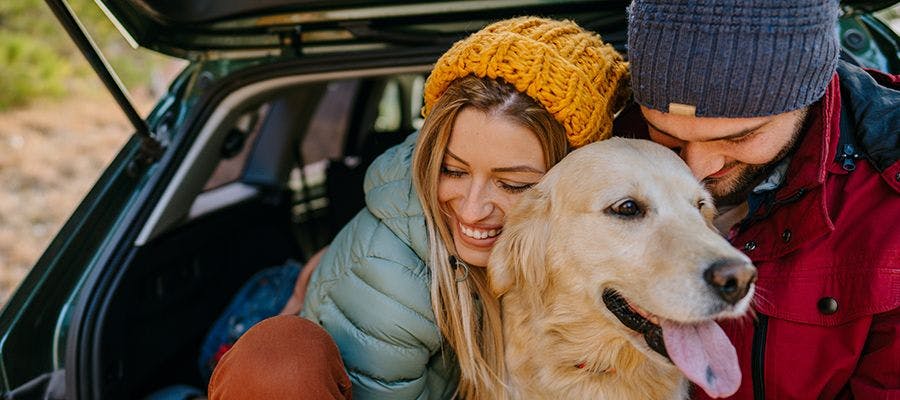
If you ask us, there’s no better travel buddy than your dog. They're happy with any detour that leads to a walk, they can't critique your driving – and you get full control of the playlist.
But whether it’s a quick day trip or a longer getaway, a little prep goes a long way. From knowing where the nearest vet is to packing all your pup’s must-haves, planning ahead means less stress and more time enjoying the journey.
Step 1: Pick the right travel products
Dog travel harness and seatbelt
Keeping your dog safely restrained during car travel is important for their safety and yours. In Australia, laws around transporting dogs vary between states and territories, so check the relevant road rules before setting off.
An unrestrained dog can distract you by jumping into the front seat or getting under your feet. They're also at serious risk in a collision.
A properly fitted, crash-tested dog harness with a suitable car restraint can help keep your dog secure. Always follow the manufacturer's instructions.
If your pup likes a good view, consider a dog car seat designed for use with an appropriate restraint.
Dog travel crates and beds
If your dog prefers a bit more security on the road, a travel crate or carrier can help them feel safe and calm, especially on longer trips.
Choose an appropriately sized crate that can be securely fastened inside the vehicle. For added comfort, pop in their favourite blanket or toy.
Dog travel water bottle and food bowl
The most important things to bring? Everyday essentials like food, water, and portable bowls or bottles that are easy to use on the go.
Travel dog bowls
Portable water bottles
Pack enough fresh drinking water for the journey and offer your dog regular opportunities to drink during breaks.
We also recommend sticking with your dog’s regular food. The last thing you want on the road is an upset stomach from a sudden diet change!
What to pack for a road trip with your dog
Aside from food, water, and travel accessories, here are a few other essentials worth packing:
- Collar or harness, lead, and ID tag
- Your dog's regular food and treats
- Favourite toys and a comfortable blanket or bed
- Poo bags, towels, and cleaning supplies
- Any regular medications
- Pet first aid kit
Before leaving, make sure your dog's microchip details and vaccinations are up to date.
Step 2: Plan the entertainment
Dog toys and treats for travel
It’s always smart to bring treats and toys to reward good behaviour, keep your pup calm, and ward off boredom.
Enrichment toys are particularly useful during rest stops or at your destination. Avoid giving your dog chews or treats that could become choking hazards while the car is moving.
Snuffle mats
Snuffle mats hide kibble or treats in soft folds of fabric, tapping into your dog's natural foraging instincts and keeping them mentally stimulated.
Treat dispenser chews
Perfect for chewers! Fill a Lexi & Me Toppler or KONG toy with kibble, treats, or dog-safe peanut butter for an engaging activity.
Boredom buster mats
Boredom busters feature maze-like grooves you can smear with wet food or dog-safe peanut butter. Licking can provide a soothing activity for some dogs.
Long-lasting chews
Simple but effective! Long-lasting dog treats and chews can keep your dog occupied during supervised breaks or once you've arrived.
Heading off on holiday or camping? Find out where the closest vet clinic is and what their operating hours are, just in case of an emergency.
Step 3: Keep them safe and feeling good
Be prepared for dog travel sickness
Just like us, dogs can get car sick. Signs of motion sickness or travel anxiety include excessive drooling, panting, whining, restlessness, and vomiting.
Calming collars, supplements, or an anti-anxiety shirt may help some dogs feel more relaxed, although they won't necessarily prevent motion sickness.
If your dog isn't used to car travel, start with short sessions in a parked car, rewarding calm behaviour with treats and praise. Gradually build up to short drives before attempting longer journeys.
If your dog continues to struggle, chat with your vet about suitable options for managing anxiety or motion sickness before introducing supplements or medication.
Never leave your dog alone on a stop
It might seem harmless to duck into the shops for a few minutes, but leaving your dog alone in the car can be incredibly dangerous – even on a mild day.
Cars heat up fast, and your dog can suffer from heatstroke in just a few minutes. Even with the windows cracked or the car parked in the shade, it's not worth the risk.
If your pup can't come inside with you, arrange for someone to safely stay with them outside the vehicle or adjust your plans.
Think about the forecast
Heading out on a winter road trip? Pack a warm blanket or dog jumper, particularly for short-haired breeds.
In warmer weather, keep the car at a comfortable temperature with adequate ventilation and air conditioning.
Don't forget to check the forecast before leaving and allow extra time for poor weather conditions.
Step 4: Know the rules, have a plan
Can dogs travel in the front seat?
While rules vary across Australia, the front passenger seat generally isn't the safest place for your dog. A deploying airbag could cause serious injuries, even if they're restrained.
Whenever possible, secure your dog in the back seat or a suitable, properly secured travel crate. Never let your dog sit on your lap, move freely around the car, or hang their head out the window.
What do you do if your dog gets anxiety in the car?
Try giving your dog treats to create a positive connection with the car. Start with short sessions in a parked vehicle before gradually introducing short drives.
If anxiety persists, speak to your vet about calming products or other management strategies.
How often should I stop for bathroom breaks when driving with my dog?
Plan to stop approximately every two hours so your dog can stretch, sniff, go to the toilet, and have some water. Puppies, senior dogs, and those with particular health needs may need more frequent breaks.
Research dog-friendly rest stops along your route and always secure your dog on a lead before opening the car door.
What should I do before taking my dog for a road trip?
Make sure your dog's vaccinations are current, their microchip details are up to date, and consider a vet check-up before longer trips.
It's also important to research your destination. Check whether your accommodation is pet-friendly, securely fenced, and suitable for your dog's needs. Look into nearby dog-friendly parks, walking trails, and beaches, too!
How to travel long distance with a dog?
Start with shorter trips and gradually build up to longer drives. Bring enrichment toys, take regular breaks, and make sure your dog is comfortable and secure.
A calm, well-prepared dog makes for a much smoother ride!
Getting ready to hit the road? Explore Petstock's full range of dog travel products for all your road trip essentials.